Seminars
This is a page for talks and seminars in our group, if you would like to give a talk, contact me via email: giannjia@foxmail.com or jiatqft@gmail.com.
The topics include mathematical physics, theoretical physics, quantum information, quantum computation, and related fields in physics and mathematics. We also welcome talks on other topics if they are interesting and related to our research.
You could also check our group homepage link for more details.
Talks in 2026
-
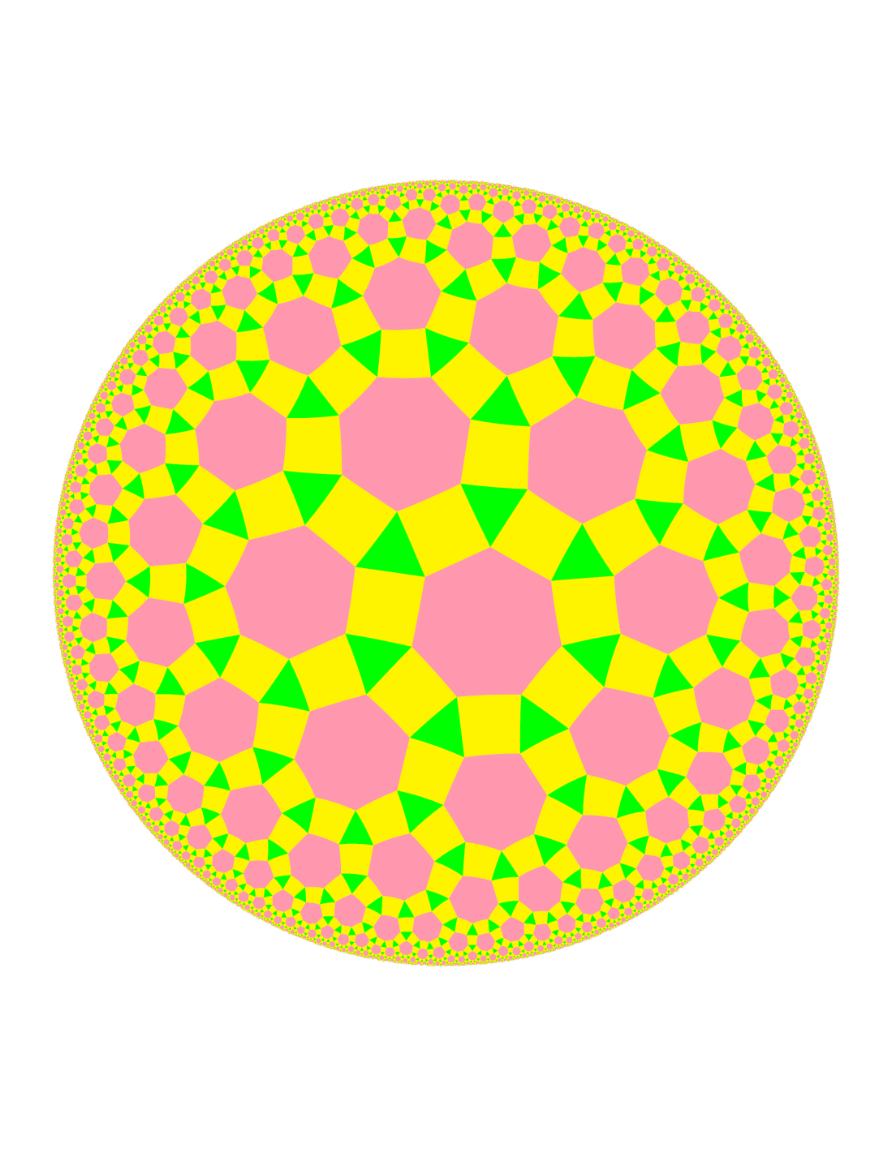
Abstract: Anyon condensation provides a powerful framework for understanding phase transitions between topological orders. While a systematic bootstrap analysis for bosonic anyon condensation has been well established (Kong 2014), a rigorous mathematical treatment of fermion condensation remains underdeveloped. In this talk, we apply a bootstrap approach to $2d$ condensation from a bosonic topological order (described by $\mathcal{C}$, a unitary modular tensor category (UMTC)) to a fermionic topological order (described by $\mathcal{D}$, a UMTC over $\text{sRep}(\mathbb{Z}_2^f)$). We show that the local excitations in $\mathcal{D}$ — a local boson and a local fermion — correspond to a direct sum $A = A_0 \oplus A_1$ in $\mathcal{C}$, which forms a connected supercommutative symmetric normalized-special super $*$-Frobenius algebra with $\dim A_0 = \dim A_1$. We call this a fermionic $2d$-condensable algebra. Then we use bootstrap method to analyze the properties of the condensed phase $\CD$ and the domain wall $\CE$ between these two topological phases. We also discuss the bulk-to-wall maps and compare with the familiar bosonic condensation scenario.
About the Speaker: Zijie Wan is currently studying at the Chern Institute of Mathematics, Nankai University, with a research focus on mathematical physics. His recent research centers on topological orders and their associated mathematical structures.
-
Abstract: Traditional descriptions of internal symmetry begin with a field algebra, a symmetry group, and a Hilbert-space representation. The observable algebra is then obtained as the fixed-point algebra, and the Hilbert space decomposes into charge sectors associated with irreducible representations of the symmetry group. In contrast, DHR superselection theory adopts a bottom-up perspective: it starts from the net of local observable algebras and describes charges as localized and transportable representations that agree with the vacuum representation outside bounded regions.For infinite quantum lattice systems, the usual representation-theoretic formulation remains dependent on a distinguished ground-state representation. DHR bimodule theory replaces states by unital completely positive maps and Hilbert-space representations by bimodule. Applied to the identity channel of the quasi-local algebra, this construction produces a canonical, state-independent C*-tensor category of localizable bimodules. In this talk, I will review the basic structure of DHR theory, introduce DHR bimodules and their localization condition, and explain the role of weak algebraic Haag duality in constructing a braiding. I will conclude with fusion spin chains associated with a unitary fusion category, whose DHR bimodule category is braided equivalent to the Drinfeld center.
About the Speaker: Mei-Hui Xiao is currently studying at Sun Yat‑sen University. My main research focuses on reconstructing intrinsic dynamical information using relevant properties of entanglement entropy; for instance, deriving the linearized field equations for the bulk spacetime via the first law of entanglement. My recent work has centered on the violation of Haag duality in lattice systems.
-
Abstract: Recently, the notion of symmetry has been generalized, including high form, subsystem, and noninvertible symmetries. These novel symmetries have extended our understanding of topological phases of matter. In this talk, I will review the recent development on generalized symmetry, with a focus on noninvertible symmetry and the phases protected by it. I will present a general method to classy a broad class of noninvertible symmetry protected topological phases (NISPTs), together with concrete lattice realizations. Finally I will show that NISPT is a natural platform to exhibit the connection between noninvertibility and entanglement.
About the Speaker: Dr. Weiguang Cao received his Ph.D. from the University of Tokyo. After graduation, he conducted postdoctoral research at the Center for Quantum Mathematics, University of Southern Denmark. His research interests focus on understanding challenging problems in condensed-matter many-body systems from the perspective of symmetry, such as the classification of topological phases. His recent research mainly centers on irreversible symmetry within generalized symmetries and its applications in condensed matter physics and quantum information.